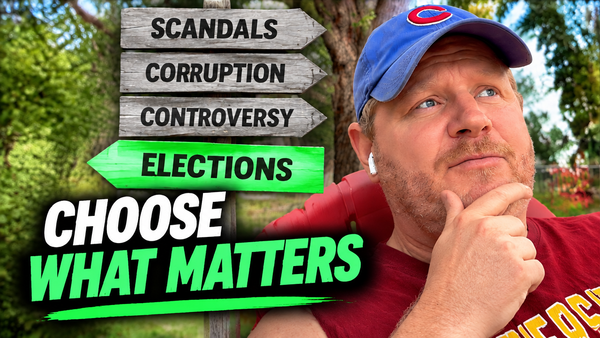
Who will save the city upon a hill?

“For we must consider that we shall be as a city upon a hill. The eyes of all people are upon us. So that if we shall deal falsely with our God in this work we have undertaken, and so cause Him to withdraw His present help from us, we shall be made a story and a by-word through the world." --John Winthrop, ‘A Modell of Christian Charity,’ 1630.

U.S. Presidents from John F. Kennedy to Ronald Reagan, and each of their successors Democrat and Republican alike have sat behind The Resolute Desk aspiring to meet Winthrop’s stated goal, to make America “a city on a hill.” If that phrase rings with you, it is because many politicians, unabashedly idealistic and Constitutionally focused in speech and prose when they are running for office, have invoked Winthrop as their proverbial north star when describing how they intended to govern if they were to be elected.
John F. Kennedy — not the first, certainly not the last
In a speech before the Massachusetts legislature on January 9, 1961, then President-elect Kennedy invoked Winthrop’s famous quote when he said, ““We must always consider,’ he said, ‘that we shall be as a city upon a hill — the eyes of all people are upon us.’ Today the eyes of all people are truly upon us — and our governments, in every branch, at every level, national, state and local, must be as a city upon a hill — constructed and inhabited by men aware of their great trust and their great responsibilities.” The context of the speech, one of the first the young President-elect made before he took the oath of office as President, Kennedy said history would judge public servants by their courage, judgment, integrity and dedication, committed to achieving Winthrop’s prescribed ideal for the common welfare of all.
Winthrop, having served as the first Governor of Massachusetts Bay Colony, is often seen by American leaders at all levels of government as one of the most centered and people-focused political leaders of his time. Kennedy, like his predecessors in wartime Presidents Franklin D. Roosevelt, Harry S. Truman, and Dwight D. Eisenhower, is considered by presidential historians and true believers in liberal democratic constitutional republicanism as having approached governing aligned with Winthrop’s sage historical guidance. By enacting the New Deal I and II relief and recovery programs and structures including but not limited to Federal Housing Administration (1934), Fair Labor Standards Act (1938), the first Food Stamp Program (1939–43), Lanham Act child care, GI Bill (1944), albeit with exclusions for black workers; war time Democrat Roosevelt established a foundational economic and social framework to benefit the working class common American family. Democrat Truman and Republican Eisenhower each chose expansion and protection of New Deal I and II programs through legislative and executive actions and deeds, representing further investment in serving and supporting all of the American population, not just a select ideological few. FDR, Truman, and Ike, each walked the walk and talked the talk of representing the common man.
Kennedy, despite having his legislative agenda cut short by his assassination, is credited with a refinement and fixing of FDR New Deal policies. By modifying and extending provisions of New Deal I and II, JFK continued to invest in and support continuing to deliver prosperity to the people through a careful legislative and executive process. With his Attorney General brother Robert F. “Bobby” Kennedy by his side as Attorney General, JFK enacted a higher minimum wage, wider Fair Labor Standards Act coverage, and the Equal Pay Act, enacted earlier retirement, welfare reform, and a push towards Medicare (enacted in 1965).
Pushing further, JFK established pilot food stamp reform programs, redevelopment and public works originally under WPA, PWA, TVA, and began working on creating the Appalachian Regional Commission and the War on Poverty programs, which his successor Lyndon B. Johnson brought to fruition after JFK’s assassination. JFK launched soft-power service programs like the Peace Corps and National Service Corps, which evolved into VISTA and AmeriCorps under successors. Most notably, the Kennedy’s attacked redlining and discrimination in housing through executive order, later enacted by successor Lyndon B. Johnson’s 1968 Fair Housing Act in tribute to the assassinated Kennedy brothers. Like his wartime predecessors and ever the gifted orator, Kennedy communicated about making things more fair and equitable for all Americans regardless of background, economic status, race, gender, or status; governed by the ethos of “as a city on a hill” through his executive office actions.
Ronald Reagan – the city's most diligent promoter
The persistently on-message President Ronald Reagan also was famous for invoking the Winthrop ideal in his speeches and writings. During a November 29, 1988 dinner speech hosted by Senate Republicans, Reagan is quoted as saying, “It's the American vision of creating a new nation of free people, a country that would be a light unto the nations, and a shining city upon a hill. It is that vision that brought each one of us here to Washington, and I know that you each will keep faith with that great American dream that burns within our souls and within the soul of every American.” Reagan is noted by many presidential historians as having invoked Winthrop more often than almost any previous occupant of 1600 Pennsylvania Avenue.
Notably, Reagan’s fiscal and social austerity policies marked a sharp departure from FDR, Truman, Eisenhower, and Kennedy, in that he prioritized slashing New Deal era social safety nets at home, while simultaneously expanding colonial military and diplomatic dominance abroad. Using the bully pulpit to promote American Exceptionalism around the world, then backing it up with money and hardware, Reagan was the first modern post-war President to sell out family farmers and ranchers, small businessmen, and the middle class; in favor of policies benefitting big-business donors, the military industrial complex, agrochemical and pharmaceutical companies, and powerful special interests like the NRA.
Reagan attacked FDR-era policies by first attacking Social Security. Reagan proposed deep cuts in 1981, which the Senate rejected 96–0; a 1983 bipartisan deal with House Speaker Tip O’Neill then stabilized the program. He further attacked Social Security Disability Income (SSDI) by tightened reviews, removing about 490,000 people, until Congress unanimously passed the 1984 Disability Benefits Reform Act. Reagan also tightened eligibility for welfare, invoking the racially-coded “welfare queen” trope as a way of pursuing his agenda. By making the image of entitlements a single Black female instead of a White farm family, he used both race and class to get what he wanted. Along with attacking labor unions through the mass-firings of air traffic controllers and FLRA decertification of their union, PATCO; Reagan opposed any minimum-wage increase, leaving it at $3.35 for his entire tenure, while simultaneously eliminating the CETA federal jobs program. Enacting deep cuts to housing voucher and halting most public housing construction projects, he put thousands of poor Americans out in the cold. Finally, in a cruel and unusually stark move, Reagan pushed through a so-called ‘reform’ of the landmark Mental Health Systems Act of 1980 enacted under Democratic predecessor Jimmy Carter, stripping-out and repealing most of the legislation in favor of state-level block grants; right when people needed mental health care more than ever, in the midst of the massive economic and social shifts of the late 1970s early 1980s.
In the mid-1980s, when family farmers were hanging themselves in barns and using their shotguns on their own heads, choosing suicide over living with the shame of not being able to make it financially, Reagan looked the other way, while predatory lenders seized their land. Those lenders then sold the land to agrochemical companies and large corporate farm operators who added it to their factory megafarms. As the 1981–82 recession pushed unemployment near 11%, Reagan cut top tax rates — a policy critics labeled ‘trickle-down.’ Simultaneously he and his GOP cronies gouged labor unions representing those little guys, neutering their efforts to maintain worker’s rights and populist political people-power. When Americans were starving and couldn’t afford their rent, mortgage, or car loans to get to a job, Reagan rode his horse. “The Gipper” talked about the shining city on the hill a hell of a lot while governing against that idea, running up the national debt, and boosting multinational corporations’ maniacal expansion to every other nation on the planet. Meanwhile, back at home, the common American working-class family suffered a death by a thousand cuts.
The Bushes – appropriators of Reagan’s legacy
George Herbert Walker Bush Sr. and his son George W. Bush each also invoked Winthrop in their speeches, but with a lack of commitment to actual ideals. George H.W. “Poppy” Bush Sr., ever the loyal Vice President to Reagan, attempted to follow in Reagan’s footsteps by doubling-down on American Exceptionalism and colonial expansionism. By removing Panamanian Dictator Manuel Noriega in Operation Just Cause, to Operations Desert Shield and Desert Storm to remove murderous Arab Sunni dictator and ex-CIA asset Saddam Hussein, Bush Sr. further positioned the U.S. as the hub of the gold standard, global trade, and the petro-economy. No longer would American depositories hold only every other country’s’ gold bullion in its vaults, it would also be the global leader in oil-for-arms trades, ensuring that the Middle East’s monarchs and strongmen needed U.S. troops and hardware to protect their oil fields, refineries, and ports. America would keep them safe, while reaping financial windfalls for corporate contractors and investors in the region.
Poppy’s campaign included the famous “Thousand Points of Light” phrase written by speechwriter Peggy Noonan, repackaging Reagan’s “Shining City on a Hill”; allowing Bush to link himself to the predominant Reagan-driven image of American Exceptionalism. He won over Michael Dukakis handily. Poppy’s use of “kinder, gentler nation” ideal throughout his campaign was backed up by a few small actions, including establishment of his “Daily Point of Light” award, where he honored 1,020 volunteers by the end of his term for acts of service. He went further to establish the National and Community Service Act of 1990 and The Thousand Points of Light Foundation.
Notably, the bipartisan Americans with Disabilities Act, co-written and introduced by U.S. Sen. Lowell Weicker (R-CT) and U.S. Rep. Tony Coelho (D-CA) didn’t pass initially in its first version, but forced Bush to pledge a version of “disabillity inclusion” in his ‘88 acceptance speech. The following year, U.S. Sen. Tom Harkin (D-IA), lead author and sponsor, partnered with U.S. Sen. Ted Kennedy (D-MA) and Coelho led a line-by-line rewrite of the measure. Harkin’s staff director, Bobby Silverstein, Kennedy staffers Carolyn Osolinik and Michael Iskowitz, advocate lawyers Chai Feldblum (ACLU), Arlene Mayerson (DREDF), and original ADA drafter Robert Burgdorf, Jr., did the heavy lifting of the massive rewrite effort on the politician’s behalf. Harkin was able to reach across the aisle to Republican U.S. Sen. Orrin Hatch (R-UT) to pass the bill out of committee, and again to GOP Senate Minority Leader Bob Dole (R-KS) to pass the ADA through the Senate, then Rep. Steny Hoyer (D-MD) battled with Rep. Jim Chapman (D-TX) over removing controversial Chapman Act exceptions which would have carved-out legalized discrimination against people living with HIV/AIDS, before passing the ADA through the House. Bush never really involved himself or White House staff in the bill until its signing, and mostly through consistent in-person lobbying by wealthy disability advocate Justin Dart Jr., living bound to an electric wheelchair after contracting polio; and Dole, a World War II combat veteran with a permanent disability. When Bush finally begrudgingly signed the ADA on July 26, 1990 with Dart, Harkin, and Dole beside him, the President said “Let the shameful wall of exclusion finally come tumbling down,” pundits at the time noting Bush’s change of heart on the issue. Bush is credited also with introducing and passing the 1990 Immigration Act and Clean Air Act Amendments.
In response to the 9/11 attacks on New York and Washington, DC, George W. Bush followed Poppy’s lead in a televised speech on the night of the attacks, saying “America was targeted for attack because we're the brightest beacon for freedom and opportunity in the world,and no one will keep that light from shining.”Then he launched dual back-to-back forever wars in Iraq and Afghanistan, injected CIA-led “counterterrorism” efforts into the Philippines, the Horn of Africa, and the Trans-Sahara. The rise of human-guided remote armed drones allowed the long arm of the U.S. to extend across the Afghan-Pakistan border, killing anything that got in the way of pursing the Taliban and another ex-CIA asset, Osama bin Laden. Back at home, under the auspices of “promoting and securing freedom” for America, millions of young men signed up to serve in the military. Much like their fathers and older brothers were sent to Saudi Arabia and Kuwait, these fresh faced troops were sent to Iraq and Afghanistan to have their limbs blown off, acquiring Post-Traumatic Stress Disorder from witnessing and experiencing the atrocities of armed conflict; or to die as cannon fodder in pursuit of protecting American oil and chemical interests. In short, George W. Bush squandered his “Shining City on a Hill” moment, spectacularly undermining his own pitch for “Compassionate Conservatism” and ruining global trust and faith in American Exceptionalism, by ordering combat killings of millions of Iraqis and Afghanis, a large measure of those civilian casualties. He further alienated himself from the American people by consistently choosing oil profits over equality and fairness for all. As a result he remained a one-term President.
Clinton and Obama – reimagining the concepts, delivering the goods
Now is usually where Conservative columnists and pundits like to inject “what about the Clintons and Obama?” arguments into the discussion. Constantly in pursuit of false equivalency, they use their media pulpits to point out that both Republicans and Democrats participated in the American Exceptionalism colonial enterprise too, and they are not wrong. When Bill Clinton ran for President, his campaign went great lengths to separate his vision for America from George H.W. Bush’s version of American Exceptionalism, proposing a "new covenant" between government and the people. As portrayed in the 1992 campaign documentary “The War Room,” Clinton’s brilliant strategists James Carville and Paul Begala doggedly moved then Arkansas Governor Clinton towards their whiteboard slogans “it’s the economy stupid” and “change vs. more of the same” as message framing for the duration of the campaign. Right out of the gate, literally in his candidacy announcement speech, Clinton counter-programmed against Bush’s “Thousand Points of Light” by accusing him of abandoning leadership of the country. "They washed their hands of responsibility for the economy and education and health care and social policy and turned it over to fifty states and a thousand points of light…,” Clinton posited on October 3, 1991. “Where there is no national vision, no national partnership, no national leadership, a thousand points of light leaves a lot of darkness."
Clinton continued rhetorical counter-programming from that point forward over the 1992 campaign and throughout his 8-year presidency, using Winthrop’s writing in a different context. Clinton chose a distinctly different angle on Winthrop’s puritan ideals in his ‘92 Democratic National Convention speech, proposing a “new covenant for America” as his campaign’s rhetorical differentiation from Bush. Clinton/Gore ‘92 consistently returned to this sharp rhetorical differentiation throughout the slugfest, eventually defeating Bush with it. Clinton’s actions once he became President-elect and on into his 2 terms featured policies aimed at rebuilding the country through an economic empowerment lens. When Clinton enacted the Family and Medical Leave Act of 1993 (FMLA), House Speaker Newt Gingrich (R-GA) and his neoconservative Republican caucus attempted to counter Clinton’s efforts by proposing the “Contract with America” early in Clinton’s first term, a direct swipe at Clinton’s “new covenant.”
Rather than engage in the GOP’s culture war fever dreams of the 1990s, Clinton focused on expanding America’s global trade and soft power through the North American Free Trade Agreement (NAFTA) (1994) that formalized open trade between the U.S., Canada, and Mexico; established the World Trade Organization (WTO) (1995), and normalized permanent trade relations with China (2000). He expanded alliances and partnerships through the expansion of NATO, where Poland, Hungary, and the Czech Republic joined the alliance (1999); but then cherry-picked American intervention actions in other conflicts, pulling out of Somalia, and non-intervention in the Rawandan genocide. He did use executive authority (with Congressional approval and oversight) in Haiti (1994), Bosnia (1995), and Kosovo (1999). Clinton also fostered peacemaking in these places and beyond — Dayton (1995), Oslo (1993) and the Good Friday Agreement (1998). Back at home he declared “the era of big government is over” and signed welfare reform(1996) and a tougher immigration enforcement law (IIRIRA) (1996).
Clinton’s executive-level actions reflected a depth of humanism and humanitarian actions as shifts in governing philosophy from his presidential predecessors. Clinton drew sharp criticism from the harder, edgier, decidedly less-compassionate far-right white christian nationalist undercurrent of Gingrich-era Republicans in both chambers, including hate-mongering bible belt homophobes Sen. Jesse Helms (R-NC), Sen. Strom Thurmond (R-SC), Rep. Dick Armey (R-TX), Sen. Trent Lott (R-MS), Rep. Bob Barr (R-GA), Sen. Rick Santorum (R-PA), Sen. Tom Coburn (R-OK), Sen. Jim Inhofe (R-OK). Across a wide swath of public policy, GOP members crusaded against equality and humanism, pushed dangerous hate-driven falsehoods, blocked lifesaving HIV/AIDS research and treatment in effect killing millions, legislated discrimination against LGBTQIA+ Americans, and later passed abortion bans that researchers have linked to many dozens of preventable maternal deaths and hundreds of excess infant deaths.
In her phenomenal expose of the Christian right-wing’s takeover of the Republican party, “The Shadow Network,” author and historian Anne Nelson details how The Christian Coalition, Family Research Council / Focus On The Family, Traditional Values Coalition, conservative talk radio host Rush Limbaugh, The Heritage Foundation, televangelists Jerry Fallwell, Pat Robertson, Kenneth Copeland, and others; leveraged broadcast media and political organizing platforms to reshape the modern Republican Party under homophobic and transphobic, misogynist, Islamophobic, anti-abortion, anti-Black, far-right policies and authoritarian principles. Using GOP members of Congress and Senators to mainstream their far-right-wing white Christian nationalist movement, these bad actors reversed George H.W. Bush’s “Thousand Points of Light” and George W. Bush’s “Compassionate Conservatism” aims completely, replacing them with a darker shade of deep blood red meat for their ravenous evangelized shock troops in church pews across the south and midwest.
Given that Clinton was up against this tsunami of right-wing hatred while actively attempting to govern in a bipartisan manner, it is no wonder that one of his signature failures as President was the 1993 passage of “Don’t Ask Don’t Tell” legislation against LGBTQIA+ members of the U.S. military – considered a key generational setback in the equality movement. When it was repealed in 2010, Clinton publicly expressed regret for signing it. By the time he left office, the equality movement had moved forward without him. Gallup polling from the time found support for same-sex marriage rose from 27% in 1996 to a majority by 2011, and about 70% at the beginning of the 2020s.
On Tuesday, July 27, 2004, when nominee for U.S. Senate and sitting Illinois State Senator Barack Obama took the 2004 Democratic National Convention stage at Boston’s FleetCenter (now rebranded as TDGarden), his keynote address signaled a new era in leadership style and substance. Obama’s “audacity of hope” speech signaled a departure from ideologically-driven division in America, proposing a return to unification as a country. The speech overshadowed the convention’s support for party nominees Sen. John Kerry (D-MA) and Sen. John Edwards (D-NC), who would go on to lose the 2004 contest to GOP nominees George W. Bush and Dick Cheney. Obama famously wrote the speech himself, with a few minor edits by the Kerry campaign, and delivered a 17-minute biographical self-intro, his vision for American Exceptionalism, and reasons for supporting Kerry and Edwards. The speech was not televised by the major commercial broadcast networks, only reaching a mere 9 million combined viewers according to Nielsen measurements, watching live on PBS, cable news, and C-SPAN. However, it was so effective that PBS commentator Mark Shields, a curmudgeon at best, exclaimed “a star is born,” and MSNBC’s Chris Matthews, also a hard case, said he had “a little chill in my legs.” The standing ovation ran almost three minutes. Four years later Obama was elected, taking office in January 2009 as the 44th President of The United States.
From the outset, Obama’s “Hope and Change” agenda, detailed in his seminal “The Audacity of Hope” campaign book, continued in his “change we can believe in” messaging through the 2008 campaign; marked a definitive return to American Exceptionalism rhetoric, but with a twist. Beginning with adapting Dolores Huerta’s United Farm Workers slogan “¡Sí, se puede!” into his “Yes We Can” campaign slogan, blending Clinton’s “a man from Hope” echo into Reverend Jeremiah Wright’s “the audacity of hope” sermon, and carrying them into the DNC speech and his campaign book; Obama leveraged the ideology of change and hope while walking the line between populism and common sense to gain American voters' support. Obama’s campaign team knew that in order to win he would have to gain middle-of-the-road voters and steal the middle from Sen. John McCain (R-AZ) and Gov. Sarah Palin (R-AK). Their gamble was to use rhetorical negation to point out what American Exceptionalism is or is not, Obama noting in the closing few days of the 2008 campaign that the old politics of division “is not who we are, and not who we have to be.” In using this strategy Obama successfully gained support from the left, the middle, and from a wide swath of undecided voters who crossed racial and economic lines to vote for him in a massive "blue wave" election year.
Obama’s actions once in office were to consistently weave unification into his legislative and executive agenda. Elected on a key promise to actively engage in equality and economic reforms, his first bill signed was the Lilly Ledbetter Fair Pay Act to equalize pay for women. He signed an executive order to outlaw torture in 2009 in response to Bush Jr.’s Abu Ghraib and Guantanamo Bay torture scandals. That same year, just a month into his first term in office, he signed The American Recovery and Reinvestment Act (ARRA)(2009) economic stimulus package to reverse the Bush economic recession which had killed 700,000 American jobs and tanked the economy. He enacted the Affordable Care Act (Obamacare) in 2010, continuing health care reform following a golden thread laid down by predecessors FDR (Second Bill of Rights), Truman, and Clinton, resulting in 20 million Americans gaining health insurance coverage and upending big health insurance and big pharma corporate profiteering. He fully repealed “Don’t Ask Don’t Tell” (2010) and signed DACA (2012), promising more fairness for all, following up with expressing full support for marriage equality. Finally, he brokered the Iran nuclear deal, negotiating the strictest observation and verification protocols ever established over any Iranian regime; signed on to The Paris Agreement to fight global climate change, and re-opened diplomacy with Cuba in light of humanitarian and economic crisis and starvation in the U.S. closest island neighbor.
The Obama presidency was not without its flaws, however. The ACA and ARRA passed with almost no Republican support, despite his efforts to engage his GOP counterparts in Congress. He allowed Guantanamo Bay to stay open, elevated drone strikes in foreign conflicts by ten times, allowed NSA mass surveillance to continue until Edward Snowden exposed it (2013), and escalated Espionage Act prosecutions to the highest level of any President. Under his watch no senior bank executives were prosecuted for fraud in consumer lending and mortgage fraud cases, and despite signing DACA, Obama’s immigration policies resulted in an estimated 2.5 to 3 million deportations, earning him the title of “deporter in chief” from immigration rights advocates. To many on the progressive left this is where the “promise of hope and change” fell apart.
Donald Trump - disrupter, corrupter, con man, authoritarian fascist
Which leads to how we got where we are today. To current President Donald J. Trump, the previous elevated language of “Shining City on a Hill” became a populist North Star twisted like a tornado with resentment, hatred, name calling, race baiting, finger pointing, and outright racism. His “Make America Great Again” slogan was from the outset a cloaked and coded racist anti-Obama backlash message driven into high-gear by the same old far-right-wing Christian Nationalist actors that caused Reagan and the Bushes to enjoy massive political power – just so long as they all stay in line on culture war issues. The difference this time is that Trump gave no illusions about what he was gunning for from the outset. Rather than embracing Reagan’s American Exceptionalism framing, Trump claimed it had been totally destroyed by a supposed black secret Muslim presidential predecessor, repeating the name “Barack Hussein Obama” in a mocking tone to underline and emphasize his disdain. Trump labeled the Obama Ayears as an “American Carnage” in his 2017 inauguration speech, with the 44th POTUS Obama still sitting on the dais, then pushed an “America First” isolationist economic agenda throughout his first term. Using his faked “Art of the Deal” and “The Apprentice” successful businessman identification, maximizing TV exposure at all times, Trump kicked off his term as 45th President by engaging far right-wing ideological supporters in a systematic dogwhistle campaign, lying to the American people continuously.
Considering that most U.S. presidents followed the core principles of liberal democratic constitutional republicanism, Trump’s radical departure from these concepts was jarring. Instead of lifting-up the American populace through inspiration and aspiration to follow the core principles, Trump cynically positioned himself as a demagogue and savior, saying “I alone can fix America” (2016). Where predecessors emphasized markets, volunteers, a covenant, or “We The People,” Trump offered himself as their slightly abusive daddy figure. Eschewing partnering with the press and running a traditionally policy-focused press operation, Trump randomly announced things on Twitter that his policy operation then had to implement as ad-hoc add-ons to his ad-hoc, continuously nebulous “business plan” for the United States of America.
Heavy on rhetoric but thin on actual policy accomplishments, Trump’s first term featured heavy emphasis on building a wall across the southern border “that Mexico will pay for,” starting no new wars, and claiming to refuse taxing or changing either Social Security or Medicare for seniors. He aggressively reshaped the federal courts, appointing three U.S. Supreme Court justices – Neil Gorsuch, Brett “Keg Stand” Kavanaugh, and Amy Coney Barrett, plus 234 federal judges over four years, including 54 on the U.S. Court of Appeals. This move was seen as Trump attempting to insulate himself, his Cabinet and administration staff, and allies from criminal prosecution while they continued their deeper agenda. That USSC majority produced the Dobbs decision (2022), effectively ending Roe v. Wade precedent; Bruen (2022) expanding gun rights; ending race consciousness in college admissions (2023); Loper Bright (2024) which ended deference to Chevron; Trump v. United States (2024) expanding presidential immunity, and Trump v. Slaughter (2026), which overruled Humphrey’s Executor (1935). The ruling, about the FTC, effectively ends removal protections at most independent commissions, though the Court signaled the Federal Reserve may differ in Trump v. Cook (2026) released the same day. Trump’s efforts were the largest overall expansion of executive power since and the single largest shift in the Court since FDR, who expanded the court to eight justices.
Trump curried favor with the largest corporations and wealthiest individuals through the Tax Cuts and Jobs Act of 2017, which cut the corporate rate from 35% to 21% permanently; doubled the standard deduction, doubled the Child Tax Credit to $2,000 per child, and capped the state and local tax deduction at $10,000. The impact of these changes was an additional $1.5-$1.9 trillion added to the U.S. deficit, and the largest tax overhaul since the Reagan era (1986). He signed the bipartisan First Step Act (2018), retroactively reducing crack cocaine sentences, resulting in the early release of thousands of prisoners from incarceration. It was seen as the first federal step backwards from the 1994 crime bill. He signed the SUPPORT Act (2018) to expand access to buprenorphine, loosened Medicaid’s restriction on paying for substance abuse treatment in larger facilities and funded treatment and recovery programs. He signed the National Suicide Hotline Designation Act (2020), creating the 988 crisis line, which launched in 2022, but then was restricted from covering LGBTQIA+ youth in crisis in 2025. Bowing to widespread criticism that he botched the response to the Covid-19 pandemic, resulting in a high death toll, widespread job loss, and economic hardship for millions of Americans; Trump signed the CARES Act (2020) and a second relief act, with bipartisan support of the Congress and Senate. These relief measures added an additional $2.2 trillion and $900 billion respectively to the national deficit.
Trump’s unfulfilled promises in his first term were many. He failed to “repeal and replace” Obama’s ACA (2017). Although talking a good game during his “Infrastructure Week,” he passed nothing, leaving the Biden Administration to carry the ball and pass an infrastructure bill in 2021. His border wall promise to build a wall across the entire southern border that “Mexico will pay for” only replaced 450 miles of old wall sections, the bill going to U.S. taxpayers because Mexico balked at his plan. He grew the trade deficit with China, falling way short of 2020 “Phase One” deal promises to reduce the imbalance. He withdrew from the Paris Climate Accords without warning, sending the global climate crisis into a tailspin.
As a piece-de-resistance for the end of his first term, Donald Trump participated in a failed coup attempt to overturn the validated results of a Presidential election, threatened the lives of his own Vice President and hundreds of members of Congress, assembled and then ordered an illegal violent armed militia attack on the U.S. Capitol on January 6, 2021. According to the bipartisan House January 6 select committee's published report, Trump’s words and deeds that day, including ordering the armed mob to march towards the Capitol, ignoring U.S. House Speaker Nancy Pelosi’s request for National Guard support to stop the attack, resulted in the injury of 140 police officers (federal and district/state), the deaths of 4 individuals involved on the day of the coup, the death of one police officer due to injuries sustained during the attack, and the suicides of 4 additional officers in the weeks and months following the coup attempt. Of his militia followers1,583 were federally charged, and 1,009 of those pled guilty (327 felonies, 682 misdemeanors), and 261 found guilty at trial – a total of 1,270 individuals convicted or pleaded guilty. 608 of those were charged with assaulting, resisting, or impeding officers, 174 of those charged with using a weapon or causing serious injury. Leaders of the Oath Keepers and Proud Boys militias, including leaders Stuart Rhodes and Enrique Tarrio, received enhanced sentences (Rhodes 18 years, Tarrio 22 years – the longest sentence).
Regarding the national debt, where Bill Clinton’s economic policies actually erased the federal debt from approximately $290 billion and created a budget surplus of $236 billion; all recent Republican administrations, including Reagan, Bush I, Bush II, and Trump increased the federal debt despite their promises to practice fiscal conservatism. Barack Obama inherited a $1.41 trillion federal debt from George W. Bush, and trimmed it down to $585 billion by the end of his second term in 2016 – a difference of $825 billion dollars, a 58% reduction and as a share of the overall economy a sharp reduction from 9.8% to just 3% according to government data. Trump on the other hand engaged in wild uncontrolled spending during his first term, even before the Covid-19 pandemic, shooting the national debt back up to $2 trillion, and eventually further to $3.1 trillion dollars – the highest in U.S. history. His successor President Joseph Biden attempted to reduce the debt a little bit, but had limited ability to get it back under control due to the recovery from Covid-19, high interest rates, debt incurred under his own American Rescue Plan, and the sheer size of Trump’s first term deficit spending. When Trump returned to office 4 years later for his second term, the national debt still sat at $2 trillion. He thus far has continued to add to the national debt to the tune of an additional $4.1 trillion since taking office, and he keeps spending like there’s no tomorrow. Again, the highest national debt of any president at any time in history.
For his second term Trump went hog wild with a darker version of his original agenda. His very first act when he assumed office was pardoning 1,500 January 6 rioters and commuting the sentences of 14 members of The Oath Keepers and Proud Boys, including Rhodes and Tarrio. About 81% of those pardoned had already been convicted or plead guilty, and at least 241 had admitted to or were convicted of attacking police officers. Trump’s Justice Department dropped all pending cases, and then fired or forced to resign the bulk of the DOJ lawyers who worked on those prosecutions.
Rather than hiring people who would check his unquenchable egoic thirst for power and money – as was the case in his first administration where he hired some reasonable actors in his Cabinet who would speak truth to power and tell him no; during his second term he has been wholly unbridled. Trump installed former Florida Attorney General and Epstein denier Pam Bondi as his new Attorney General, podcast host and serial party boy Kash Patel as FBI Director, podcaster and conspiracy theorist Dan Bongino as FBI Deputy Director, conspiracy theorist and Science of Identity Foundation cult member Tulsi Gabbard as Director of National Intelligence, former South Dakota Governor Kristi Noem as Secretary of Homeland Security, and former Fox Weekend host Pete Hegseth as Secretary of Defense. He also appointed a slew of unqualified candidates for top agency and commission appointments, more than 50 of which eventually were withdrawn for ethical or legal problems. Two years in, Bondi, Noem, and Gabbard are now out. Trump replaced Bondi with his personal attorney Todd Blanche, and changed Pete Hegseth’s title to Secretary of War and the DOD to the “Department of War” without required Congressional authorizations. Multiple members of Trump’s administrative appointments and staff, including DOJ lawyers under Bondi and Blanche, are accused of perjuring themselves by lying under oath during Congressional appointment and oversight hearings, and lying to the federal courts in a myriad of cases.
Trump started fast out of the gate with controversial legislation too, passing the Laken Riley Act (January 2025) requiring detention of undocumented immigrants, rapidly followed by flimsy cryptocurrency legislation under the GENIUS Act (July 2025) allowing more cryptocurrency investment with little oversight. He passed a $9 billion rescissions package (July 2025) gutting public broadcasting and foreign aid, crippling American soft power around the world. Despite the passage of the Epstein Files Transparency Act, his Department of Justice has only released a one-fifth of the known files, much of the haul so heavily redacted that reporters and members of Congress on all sides have decried the way it was released. To date no one but Epstein and his co-conspirator Ghislane Maxwell have been prosecuted for the related crimes, despite a known co-conspirator list showing more than 300 individuals who participated within the so-called Epstein human trafficking network. Meanwhile Trump turned American’s sensitive personal data over to Elon Musk and his band of merry DOGEers who in-turn violated security and privacy protections to protect the data, mindlessly slashing programs and budgets without notice or logic, all the while filling Palantir’s databases with Americans' most private information.
Trump doubled-down on attacking his political and legal enemies, pursuing retribution for perceived past insults, and pursuing unfettered graft and corruption at every turn. First and foremost he was convicted on 34 felony counts of falsifying business records, and found liable in a civil case for sexually abusing E. Jean Carroll. After the Supreme Court granted presidents broad immunity for official acts in Trump v. United States (2024), in his second term Trump has attacked everyone from New York Attorney General Leticia James to former FBI Director James Comey, to journalists Jim Acosta and Don Lemon. He has filed multiple appeals to attempt to not pay damages to his sexual assault victim E. Jean Carroll. He took over operations at The Kennedy Center and pushed it into bankruptcy just because a judge made him take his name off the side of it. He then demolished the East Wing of The White House to build what is now described as a high-tech nuclear doomsday bunker covered by an unnecessary gilded ballroom with defensive drone ports and classified anti-terror countermeasures on its roof. Now he is attempting to build another monument to himself via an unnecessary "Triumphal Arch" topped with a military drone port and containing an ammo depot, just steps away from Arlington National Cemetery and The Pentagon – a monument no one but Trump wants.
Using "Big Beautiful Bill" funding he strong-armed and threatened members of Congress in order to pass, Trump created a new enhanced network of detention centers, private prisons, a gestapo-like paramilitary police force out of corrupted elements of Customs and Border Patrol (CBP) and Immigration and Customs Enforcement (ICE), backed up by Department of Homeland Security Investigations detectives, and a whole new batch of DOJ lawyers who would not refuse orders to prosecute immigrants under Bondi and Blanche. At Trumps direction, dhs Secretary Noem tasked CBP’s Greg Bovino to conduct unsanctioned and illegal immigration sweeps in multiple cities, without required judicial warrants. Bovino’s gestapo thugs descended upon Chicago, Los Angeles, Minneapolis / Saint Paul, and other American cities, leaving dead bodies in their wake, including high-profile daytime executions of civilian protesters Renee Good and Alex Pretti just two weeks apart in the same neighborhood in South Minneapolis, MN. 10 more ICE/CBP/DHSI killings occurred in other places – Ophelia Bauckholt, Coventry, VT; Ruben Ray Martinez, South Padre Island, TX; Ryan Luis Mosqueda, McAllen, TX; Silveria Villegas Gonzalez, Chicago, IL area; Isalas Sanchez Barboza, Rio Grande, TX; Keith Porter, Northridge, CA, Los Angeles area; Unnamed Man, Memphis, TN; Lorenzo Salgado Araujo, Houston, TX; Unnamed Man, Yuma, AZ; and Johan Sebastian Duran Guerrero, Biddeford, ME.
Five more individuals have died unnecessarily during enforcement operations. Most notably, in 2025, 32 individuals died while in custody in ICE detention facilities scattered across the United States. Thus far in 2026, deaths in ICE detention facilities is on pace to surpass 2025 numbers with an additional 28 occurring through the end of September. Despite Noem’s firing over the Good and Pretti killings, and Bovino’s forced retirement, their replacements DHS Secretary Markwayne Mullin, and Border Czar Tom Homan, effectively continued their dirty work, escalating the detention of thousands of individuals without statutorily required judicial review, violating citizens’ Constitutional rights to due process, and practicing third-country deportations to countries where said individuals had no connection whatsoever, in violations of federal court orders. Meanwhile Kristi Noem somehow continued to fly beyond First Class on her private government jet, her boy toy Cory Lewandowski in tow, together giving the Mile High Club a whole new meaning while galavanting from meeting to meeting on the taxpayer dime.
Early in 2026 Trump violated one of his biggest campaign promises from both the first and second runs for President. After repeatedly promising "no new wars" to his brainwashed MAGA cult members, he started illegal wars for oil in both Venezuela and Iran, sending global oil prices into the stratosphere. In Venezuela he illegally blew up fishing boats that he and Hegseth claimed were drug boats using military resources. They violently deposed a sitting democratically-elected leader, installed a puppet successor, then stole the country’s oil like a page out of Russia’s Vladimir Putin’s authoritarian playbook – ostensibly lining Trump's pockets with oil money. In Iran they started a forever war in an attempt at overthrowing the authoritarian Iranian regime, including killing Supreme Leader Ayatollah Kahmenei, maiming his successor son Supreme Leader Majtaba Khamenei, and disintegrating more than 50 senior officials. Initially Trump claimed he was forced to take action due to Iran’s nearing completion of a possible nuclear capable weapon, but all information gleaned by U.S. and foreign intelligence sources since then indicate the was lured into the war by fellow warmonger Israeli President Benjamin “Bibby” Netanyahu’s promises that Trump could capture Iran’s oil and gas resources. Middle Eastern allies now are being attacked in retaliation for the Iran attacks, and Trump continues to manipulate oil prices in favor of lining his own pockets with money from a wide range of war-related interests attached to the global military industrial complex. Once again thousands of American service men and women are being used in an illegal war for oil that almost no one supports, while back at home hard working Americans pay $5-9 dollars per gallon of gas, forced to choose between filling the tank and filling the grocery cart. Last week he lifted sanctions on Russian oil, basically shifting allegiance from Ukraine to Russia during the bloodiest time in the Russia-Ukraine war. He gave Putin free license to earn money off Russian oil exports, ignoring a recently-passed Congressional impostion of sanctions on Russia. He doesn't give a shit, and doesn't care who knows it that he's Vlad's boy.
Last but not least, and most importantly, Donald Trump has for months threatened that he may attempt to interfere with the upcoming U.S. midterm elections in order to protect his control over a feckless and impotent GOP-controlled Congress. This is no less than a fundamental attack on the baseline checks-and-balances provided by the U.S. Constitution, and it is his most important authoritarian project aimed at disenfranchising the American people. Beginning with claims that elections are rigged, he damaged the public’s trust in free and fair elections. Second, he attempted to gain access to each state’s independently-controlled elections data and technical apparatus, to which many state elections officials have resisted. Third, and most recently, last Friday Trump’s Department of Justice threatened to prosecute and jail any elections official who lets a non-citizen voter cast a ballot – despite public and private reviews of past and current voter data documenting that non-citizen voting is vanishingly rare. Now, just in time to twist the upcoming midterm elections that could possibly flip both chambers of the U.S. Legislative branch to Democratic control which could mean massive humiliation and possible legal jeopardy for him, Trump is attempting to scare and intimidate elected public officials who do not do his bidding.
And what about the MAGA-GOP-controlled Supreme Court, House, and Senate – all of which are rubber stamps for Trump’s authoritarian stranglehold over the U.S. government, military, and economy? Will any of them stand up to him, or will they all continue to do nothing while he systematically keeps them all under his thumb? Arguably some elected officials who assumed office before or inside his first term, or have continued to enable the corruption and illegality in his second, could be held responsible for not representing the people couldn’t they? Isn’t that what they signed-up for, to put the United States back in “Shining City on a Hill,” “Thousand Points of Light” territory? Sadly they will do no such thing.
Donald J. Trump, bolstered by his violent MAGA cult militias and brainwashed disciples, enabled by his SCOTUS and federal court lackeys, backed-up by MAGA House and Senate radicalized right-wing Christian nationalist co-conspirators, will continue attacking the “Shining City on a Hill” of American Exceptionalism until it is completely burned to the ground. No more does puritan lawyer and first colonial Governor John Winthrop’s timeless guidance and counsel ring in their ears as they pursue life, liberty, and justice for all; because they no longer believe in it. Instead they believe in hoarding money, engaging in corruption, accumulating supreme power, facilitating graft, protecting justice for the few, the privileged, the wealthy and white male patriarchy. Congressional Democrats have their own problems, having proven feckless in countering Trump’s massive attack on American democracy. Checks and balances? Hardly.
This all leads to a deeply troubling ask...
Will Americans step-up to rescue the burning “Shining City on a Hill,” or will they look away from MAGA’s path of destruction, pillaging, and purging of the country’s values, blood, and treasure?
Will they wake up to save the U.S. Constitution by participating in the fight to protect our fragile liberal democratic constitutional republic?
After this midterm election, will we have a republic at all?
Are you mad enough now to get off your ass and do something about it?
I am.